It is possible to describe Nigeria's livestock sector in confident macro terms. It contributes roughly 5–8% of national GDP. It supports the livelihoods of over 20 million people. It spans cattle, sheep, goats, poultry and pigs across every agro-ecological zone in the country.
What is considerably harder is to answer a simple operational question: how many cattle are in a given local government area this month, who owns them, what they have been vaccinated against, and where they were three weeks ago.
For most of the country, nobody can answer that. Around 77% of livestock farmers across 16 states and the Federal Capital Territory keep no basic production records. That single statistic is the hinge on which a surprising number of other failures turn.
Cost one: productivity that cannot be improved because it cannot be measured
Milk yield among indigenous Nigerian cows sits at roughly 5 litres per day, against 15 or more litres in specialised dairy breeds. The consequence is visible in the import bill: Nigeria imports approximately 60% of its milk (around 900,000 tonnes) at a cost near $1.5 billion a year.
Closing that gap is a genetics and husbandry problem, and genetics is fundamentally a data discipline. Selective breeding requires knowing which animals produced what, from which parents, under what feeding regime. Without individual animal records, a national breeding improvement programme has nothing to select on. It becomes a distribution exercise for imported semen rather than an improvement programme for the national herd.
You cannot breed for a trait you have never recorded. The dairy deficit is downstream of the data deficit.
Cost two: outbreaks discovered late
Foot and Mouth Disease, Peste des Petits Ruminants and African Swine Fever continue to circulate, sustained by insufficient veterinary services, poor biosecurity and weak monitoring. The monitoring weakness is the one that compounds: an outbreak detected in week four is a fundamentally different event from the same outbreak detected in week one, in both animals lost and cost of containment.
Detection speed is a function of two things: how quickly a herd owner reports an unusual death, and how quickly that report reaches someone able to act. Where there is no registry, no mobile reporting channel and no dashboard aggregating signals across neighbouring wards, the sector is effectively relying on rumour propagation. That is why our target of an 80% reduction in outbreak response time is framed around digital early warning rather than around adding more veterinarians alone.
Cost three: credit that never arrives
Smallholders struggle to access credit, vaccines, quality feed and professional veterinary care. The credit constraint in particular is often described as a problem of risk appetite among lenders. It is at least as much a problem of verifiability.
A lender assessing a livestock enterprise wants to know what the borrower owns, what it produces, what it costs to run and what it is worth. A producer with no production records cannot answer any of those questions in a form a credit committee will accept. The herd is real; the evidence is not. Formal finance therefore prices the entire segment as undocumented risk, or avoids it.
A registered producer inside a livestock information system, with a herd record and a vaccination history, is a materially different credit proposition, which is why registering 100,000+ producers in digital data platforms is an economic intervention as much as an administrative one.
Cost four: policy written in the dark
Federal initiatives including the National Livestock Transformation Plan, animal disease control programmes and the Livestock Productivity and Resilience Support (L-PRES) project represent serious commitment to the sector. Their effectiveness depends on being able to allocate resources where the need is greatest and then observe whether the allocation worked.
Without an interoperable national picture, allocation defaults to political weight and historical precedent, and evaluation defaults to activity counts (sessions held, doses distributed) rather than outcome change. Duplication follows: three programmes vaccinating the same accessible communities while harder-to-reach wards are missed by all three, because no shared record exists to reveal the overlap.
Cost five: conflict without evidence
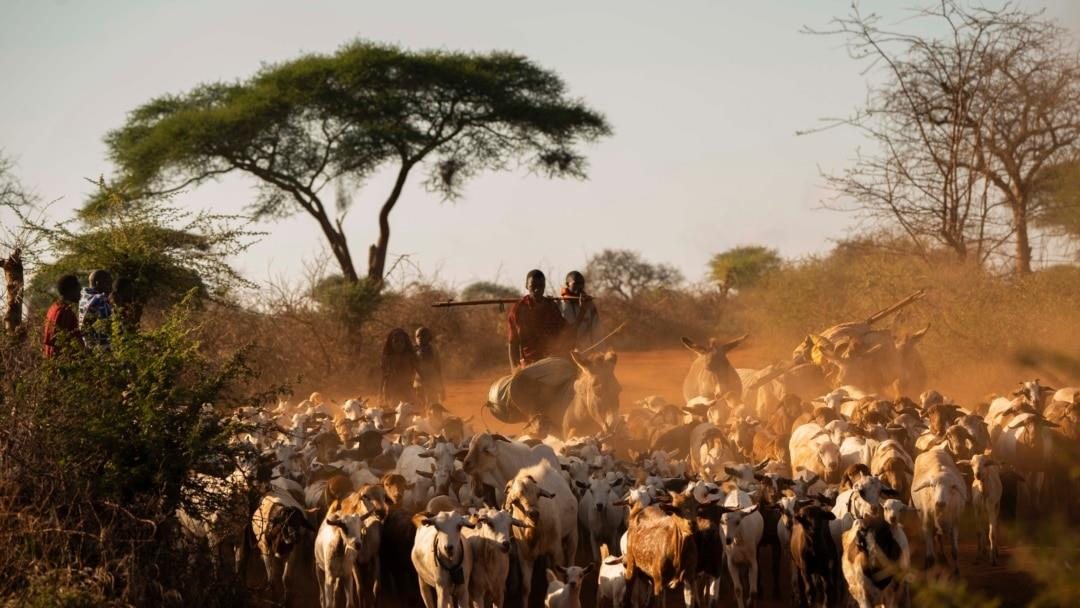
The security dimension is where the absence of records becomes most stark. Between 2005 and 2021, farmer–herder conflict was associated with 8,343 deaths. In Zamfara State alone, roughly 377,245 livestock were stolen between 2011 and 2019: losses exceeding ₦2.8 billion.
Rustling on that scale is possible partly because stolen animals are effectively untraceable. There is no ownership registry to check against, no identification standard, and consequently no functioning market barrier between a stolen animal and a legitimate sale. Traceability infrastructure is usually justified on export-compliance grounds. In the Nigerian context it is also a crime prevention measure and a conflict de-escalation tool, because a documented ownership claim is a claim that can be adjudicated rather than avenged.
What closing the gap actually requires
The temptation is to treat this as a software procurement. It is not. A livestock information system that closes this gap has to satisfy four conditions simultaneously:
- Capture at source. Data recorded in the field, where the animal is (through mobile tools, community informants, and where appropriate RFID tags and sensors) rather than reconstructed later from paper returns.
- Geospatial from the start. GIS integration, because livestock questions are movement questions. A herd census without location is a snapshot of something that does not stand still.
- Interoperability. A centralised, integrated database that federal MDAs, state ministries and LGA authorities can all read and write, rather than eight parallel systems that each hold a fragment.
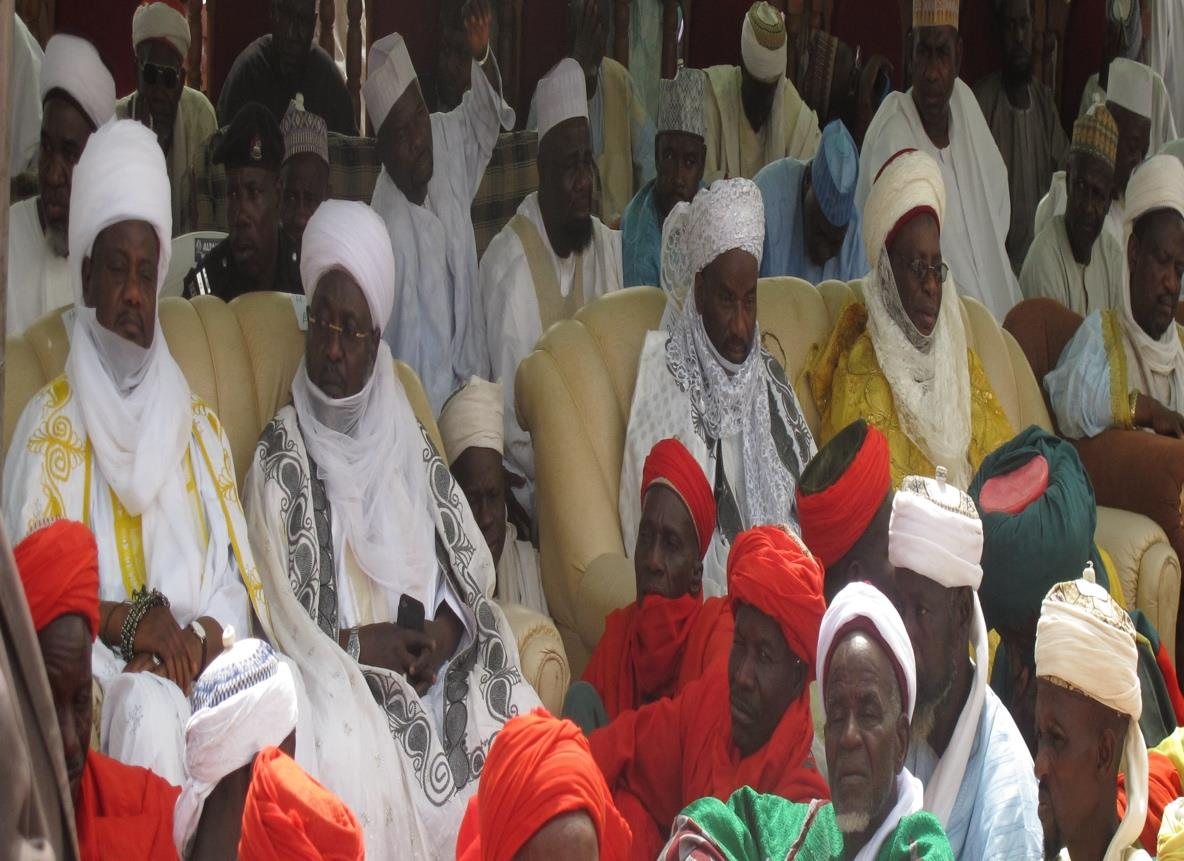
- Community consent. Registration that producers understand as a route to services, insurance and credit, not as a tax roll. This is where the data agenda and our traditional leadership work meet, and why they are not separable.
Our benchmark for success is not deployment but reliability: 95% data accuracy in herd management records and disease surveillance databases, across 125+ sub-national administrative levels. A system that is present but wrong is worse than no system, because it produces confident decisions on false premises.
The through-line
Each of the five costs above is usually treated as its own programme: a breeding programme, a surveillance programme, a financial inclusion programme, a policy support programme, a conflict mitigation programme. Run separately, each spends part of its budget rebuilding the same missing information base.
Treated as one systems problem, the data layer becomes shared infrastructure, built once, used by all five. That is the case for holistic livestock development, and it is the reason CHOLD Initiative leads with data intelligence rather than adding it at the end.